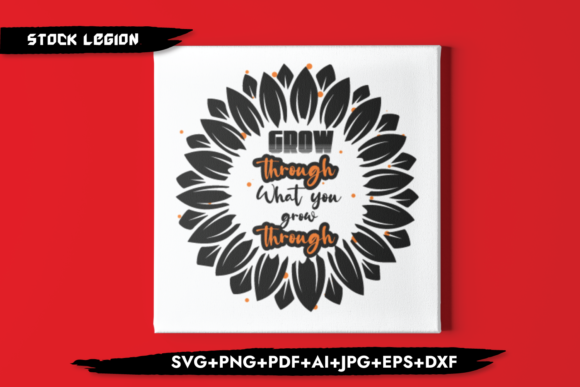
Reviewing Grow Through What You Go Through
As a designer who spends more time staring at stitch simulations than I do sleeping, I have learned that not every pretty graphic translates into a quality machine embroidery design. Some files look fantastic on a screen but turn into a tangled mess of thread breaks and puckering once they hit the fabric. That is why I approach every new file with a mix of optimism and skepticism. Recently, I pulled up Grow Through What You Go Through to evaluate its potential for my current roster of client projects. This isn’t just another generic quote; it is a piece of Crafts media that carries emotional weight, and for an embroidery professional, that means the execution has to be flawless.
First Impressions and Visual Personality
The first thing that strikes you about Grow Through What You Go Through is its inherent warmth. The inclusion of the sunflower motif immediately softens the message, turning what could be a stern directive into a gentle reminder of resilience. From a layout perspective, the balance between the typography and the floral elements feels intentional. In the world of Graphics, whitespace is king, but in embroidery, density is the constraint. The design appears to respect the limits of the hoop, offering a composition that breathes rather than suffocates the fabric.
The mood is uplifting yet grounded. It fits perfectly into the current trend of mental health awareness and self-care products. For an Etsy seller or a small shop owner, this is the kind of imagery that stops the scroll. It doesn’t scream for attention; it invites it. The visual personality suggests durability and growth, which aligns beautifully with the tactile nature of stitched goods. When I visualize this as a finished product, I see it working best on items that are meant to be held, worn, and cherished over time.
Real-World Application: The Tote Bag Test
To truly understand how a design performs, you have to imagine it in situ. I recently worked on a custom order for a local bookstore looking for tote bag design options for their staff appreciation gifts. Grow Through What You Go Through was an immediate contender. The 6x6 inch dimension mentioned in the file details is ideal for a standard tote center panel. It is large enough to be legible from a distance but compact enough to remain elegant.
Imagine stitching this onto a heavy canvas tote. The structural integrity of the bag supports the stitch density well. The sunflower petals would likely require a combination of satin stitch for the edges and fill stitch for the body to create depth. The text, depending on its thickness in the source file, would need careful attention to ensure the letters don’t merge together. If the font is too thin, it might disappear into the weave of the canvas. If it is too bold, it could become stiff. This is where the "smooth professional files" claim needs to be verified by running a test stitch on scrap fabric. For a handmade product intended for daily use, durability is non-negotiable.
Versatility Across Product Lines
Beyond totes, this design has legs in several other categories. For sweatshirt embroidery, the cozy, comforting message pairs wonderfully with fleece or French terry fabrics. However, stretchy fabrics require a cut-away stabilizer to prevent distortion, especially with a design of this size. I can also see this working as a personalized gift for someone going through a difficult transition, such as a job change or recovery. Embroidered onto a high-quality pillow cover, it becomes a piece of home decor that offers silent support.
For those in the craft business sector, versatility equals profit. This single digital embroidery file could be adapted for aprons, kitchen towels, or even baby items if scaled down appropriately. The theme of growth resonates with new parents, making it a subtle yet powerful choice for baby embroidery projects, provided the thread colors are softened to pastels and the placement is safe and comfortable.
Technical Considerations and Stitching Clarity
While the aesthetic appeal is strong, the technical execution is where many designs fail. The product description notes that these are cutting files tested at high quality, including a ZIP file with 300 dpi images. As an embroiderer, I must clarify a crucial distinction: 300 dpi images are raster graphics, not native embroidery files like PES or DST. If you are purchasing this for machine embroidery, you must ensure you are getting the actual stitch file, not just a picture of the design. If the package only contains image files, you will need to digitize it yourself or convert it, which can lead to poor stitch paths if not done correctly.
Assuming you have the proper native embroidery file, pay close attention to stitch density. Sunflowers can be deceptively complex. Too many overlapping petals can create bulk, leading to needle breaks or thread snapping. I recommend checking the color sequence in your software. A well-digitized design will use underlay stitches effectively to anchor the top stitches, ensuring the sunflower sits flat against the fabric.
Thread color contrast is another vital factor. On dark fabrics, a bright yellow sunflower pops beautifully, but the text must be equally contrasting. White or cream thread often works best for readability. On light fabrics, consider using a darker outline or a shadow effect to ensure the design doesn’t wash out. Always test your thread colors on the actual fabric you plan to use, as lighting conditions in photos can be misleading.
Navigating Fabric and Hoop Constraints
Not every surface is suitable for this design. Curved surfaces like caps present a challenge due to the 6x6 size. Most standard cap hoops are smaller, so you would need to check if the design can be resized without losing detail. Resizing embroidery files is risky; shrinking it too much can cause the tiny details in the sunflower centers or the letter serifs to become unrecognizable blobs of thread.
Textured fabrics also require caution. If you are stitching on a waffle-knit towel or a rough linen, the fine details of the quote might get lost in the texture. In such cases, increasing the stitch count slightly or choosing a bolder font variation can help maintain clarity. For thin or stretchy fabrics, always use the appropriate stabilizer. A tear-away might suffice for stable cottons, but knits demand a cut-away to maintain the shape of the embroidery after washing.
Building Trust and Brand Value
Using high-quality designs like Grow Through What You Go Through directly impacts your brand perception. Customers associate clean, crisp stitching with professionalism. A messy, poorly digitized design can undermine the perceived value of even the most expensive garment. By choosing a design that balances emotional resonance with technical feasibility, you build trust. Your customers know that when they buy a custom apparel item from you, it will last.
For commercial embroidery projects, consistency is key. If you are producing batches of these for a boutique, ensure your tension settings are calibrated for each run. Small variations can add up, leading to inconsistent product quality. Use this design as a staple in your portfolio, showcasing your ability to handle both textual and graphical elements seamlessly.
Final Designer Notes
Before you commit to a full production run, follow these steps:
- Test on scrap fabric: Always stitch a sample on the same material and weight as your final product.
- Check licensing: Confirm whether the license allows for commercial use if you plan to sell finished items. The description mentions "professional files," but explicit commercial rights should be verified.
- Inspect small details: Zoom in on the digitized file to check for redundant stitches or awkward jumps that could cause thread nests.
- Mockup in black and white: This helps you see the contrast and structure without the distraction of color.
- Verify file formats: Ensure the ZIP file contains the specific embroidery format compatible with your machine (e.g., PES, JEF, DST), not just image files.
In conclusion, Grow Through What You Go Through is a promising asset for any designer’s library. Its strength lies in its emotional connectivity and versatile layout. However, its success depends entirely on proper technical handling. Treat it with the respect it deserves, test it thoroughly, and it will become a reliable staple in your embroidery project lineup, helping your customers grow through their own journeys, one stitch at a time.