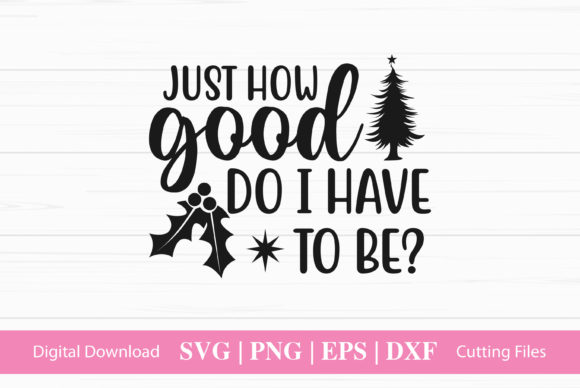
Reviewing Just How Good Do I Have to Be
As a designer who has spent countless hours digitizing and stitching out thousands of patterns, I have learned that the best designs are not always the most complex. Sometimes, the power lies in the message and the clean execution of the layout. Recently, I came across Just How Good Do I Have to Be, a digital asset categorized under Crafts and Graphics, and I wanted to evaluate it not just as a file, but as a viable component for real-world embroidery projects. This is not a basic product description; this is a practical look at how this design holds up when put under the needle.
First Impressions and Visual Mood
The first thing that strikes you about Just How Good Do I Have to Be is its thematic relevance. It carries a distinct Christmas vibe, anchored by a creative quote theme that balances humor with holiday spirit. For an embroidery designer, the initial visual check is crucial. Does the layout breathe? Is the text legible? In this case, the design offers a clean structure that suggests it will translate well into stitch form without becoming a tangled mess of thread breaks.
The mood is playful yet polished. It does not scream for attention with excessive ornamentation, which is often a trap for holiday designs. Instead, it relies on the strength of the typography and the seasonal context. This makes it versatile. It feels like a design that belongs on a cozy item rather than a formal garment, guiding us toward specific product applications where comfort and personality are key.
Real-World Application: The Custom Sweatshirt Test
To truly understand the value of a design, you must imagine it on a finished product. I envisioned using Just How Good Do I Have to Be for a custom apparel order. Specifically, I pictured it centered on the chest of a high-quality, heather grey sweatshirt. This is a staple item for any small shop product line or Etsy seller looking to expand their holiday inventory.
In this scenario, the design acts as the focal point. Because it is a quote-based graphic, the clarity of the letters is paramount. If I were stitching this out as a machine embroidery design, I would pay close attention to the stitch density. A sweatshirt fabric has a bit of texture and pile, so the design needs enough substance to stand out without sinking into the fleece. The creative theme suggests it would pair beautifully with traditional reds and greens, or perhaps a modern twist with metallic gold thread against a neutral background.
Beyond apparel, this design has strong potential for home goods. Imagine it stitched onto a canvas tote bag design for holiday shopping, or embroidered on a kitchen towel as a festive gift. The versatility of the quote allows it to cross over from wearable art to functional decor, increasing its appeal to a broader range of customers.
Technical Considerations for Embroidery
While the aesthetic is promising, we must discuss the technical realities of stitching out Just How Good Do I Have to Be. Since this is provided as a digital download, specifically noted as a SVG design often used for sublimation, there is a critical distinction to make for embroidery professionals. If you are converting this for embroidery, or if it comes with an accompanying embroidery file, you must verify the format.
For those digitizing this themselves or working with a pre-made embroidery file, here are the key areas to inspect:
- Stitch Type: Determine if the text uses satin stitch or fill stitch. Satin stitches offer a shiny, smooth finish but can be prone to snagging if too wide. Fill stitches provide better coverage on textured fabrics but use more thread.
- Stitch Density: Check the density settings. Too dense, and you risk perforating thin fabric or causing puckering. Too sparse, and the backing might show through, ruining the professional look of your handmade product.
- Hoop Size: Confirm the required hoop size before starting. You do not want to begin a project only to realize the design exceeds your machine’s capacity, especially if you are working on smaller items like baby embroidery projects or caps.
- Stabilizer Choice: Given the likely application on garments like t-shirts or sweatshirts, a cut-away stabilizer is often recommended to prevent distortion after washing. For woven items like aprons or pillow covers, a tear-away might suffice.
Navigating Fabric and Surface Challenges
Not every surface is created equal. When applying Just How Good Do I Have to Be to curved surfaces like caps or hats, extra care is needed. The curvature can distort the text, making it appear arched or uneven if not hooped correctly. Using a cap frame and appropriate stabilizer is non-negotiable here.
Additionally, consider the fabric texture. On dark fabric, you may need to adjust your thread colors for maximum contrast. A test stitch on scrap fabric is essential. This allows you to check thread color contrast and ensure that the small details of the quote remain crisp. If the design includes tiny lettering, verify that your machine can handle the precision required. Tiny details can easily become lost in the nap of a towel or the weave of a rough linen.
For items that require frequent washing, such as baby clothes or kitchen textiles, the durability of the stitch-out is vital. Ensure that any jump stitches are trimmed and that the design is securely anchored. A loose thread can unravel the entire aesthetic of your personalized gift.
Commercial Viability and Brand Consistency
For craft business owners and commercial embroidery professionals, the question is not just "can I stitch it?" but "will it sell?" Just How Good Do I Have to Be has strong giftability. It taps into the humorous side of holiday stress, which resonates with many buyers. It fits well within a boutique branding strategy that values wit and warmth.
However, before listing this as part of your small shop product lineup, you must confirm licensing. Since this is a digital embroidery file or graphic asset, ensure you have the rights to use it for commercial purposes. Can you sell finished items? Can you use it in printable mockups for your online store? These details are crucial for maintaining professionalism and avoiding legal issues.
Using this design in your marketing materials, such as printable mockup previews, can help visualize the end result for potential buyers. Show it on a variety of products—tote bags, pillows, and apparel—to demonstrate its versatility. This helps build customer trust and shows that you have thoughtfully considered how the design performs in different contexts.
Final Verdict for Designers
In conclusion, Just How Good Do I Have to Be is a solid contender for your holiday design assets. It offers a clear, engaging message that translates well into the tactile world of embroidery. Whether you are creating a custom embroidered patch, a festive apron, or a line of holiday sweatshirts, this design provides a strong foundation.
Remember to treat it with the technical respect it deserves. Test your tension, choose your stabilizer wisely, and always prioritize stitch clarity. By doing so, you elevate a simple digital download into a high-value finished product that customers will cherish. For the experienced designer, it is another tool in the kit; for the hobbyist, it is an accessible entry into creating professional-grade holiday decor. Just ensure you check the specific file details and license terms provided in the download to align with your specific project needs.