Reviewing Welcome to Our Love Story for Embroidery
As a designer who spends more time staring at stitch simulations than I care to admit, I have learned that not every pretty graphic translates well to thread. When I first pulled up Welcome to Our Love Story, my initial reaction was one of cautious optimism. It is marketed broadly across Crafts and Graphics categories, which often signals a generic asset. However, looking past the marketing tags, I saw potential for a specific niche of sentimental, high-value handmade products. This review breaks down how this design holds up when moved from a screen to an embroidery hoop, focusing on practical application for Etsy sellers, boutique owners, and serious hobbyists.
First Impressions and Visual Personality
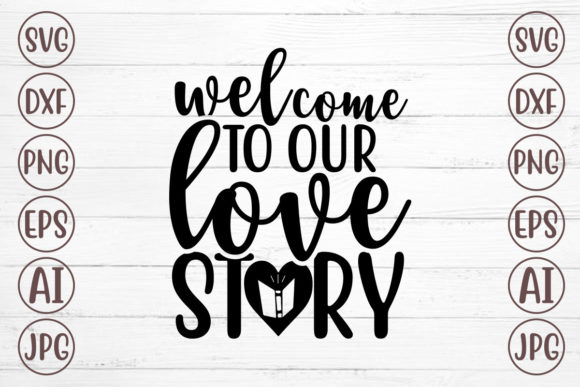
The phrase itself carries a heavy emotional weight. It suggests beginnings, weddings, anniversaries, or new homes. Visually, the layout appears balanced, likely relying on a mix of script and sans-serif typography to create contrast. For an embroidery project, this contrast is crucial. If the design relies too heavily on thin, flowing script lines, it risks getting lost in the fabric texture. My first step in evaluating any digital embroidery file is to imagine it stitched out in a single color. Does the shape hold its integrity? With Welcome to Our Love Story, the structural balance seems solid enough to work as a focal point on larger items like tote bags or wall hangings, provided the letter spacing is generous enough to prevent thread bunching.
Real-World Application: The Custom Tote Bag Scenario
To test the viability of this design, I mentally placed it on a canvas tote bag, a staple for any craft business. Canvas has a distinct weave, which can swallow up fine details. In this scenario, Welcome to Our Love Story would need to be scaled appropriately. If the text is too small, the individual stitches might merge, turning legible words into a blurry blob. For a tote bag, I would recommend using a heavier weight thread, perhaps a 40wt rayon or polyester, to ensure the letters pop against the textured background. The mood here is welcoming and romantic, making it an ideal personalized gift for bridal showers or housewarmings. The design’s simplicity allows it to shine without requiring complex color changes, which keeps production time low for small shop products.
Apparel and Soft Goods Considerations
Moving from sturdy canvas to softer fabrics like cotton blends for sweatshirt embroidery or baby clothes introduces new challenges. Stretchy fabrics require careful attention to stabilizer choice. If you are applying this design to a knit sweatshirt, a cut-away stabilizer is non-negotiable to prevent the fabric from puckering under the stitch density. The phrase "Love Story" implies a narrative, making it a strong candidate for custom apparel sold by Etsy sellers. However, you must consider the curve of the garment. Placing this design on the chest of a hoodie works well, but placing it on a curved sleeve or a cap requires checking the distortion. Caps are particularly tricky; if the design is wide, it may wrap around the curvature awkwardly. Always preview your design on a 3D mockup before committing to stitching.
Technical Challenges and Fabric Compatibility
One of the most critical aspects of using any graphics-based embroidery design is understanding its limitations on different materials. Welcome to Our Love Story likely contains areas of varying density. Dense stitch areas can cause fabric to pucker, especially on thin materials like silk or lightweight linen. If you plan to use this on a delicate tea towel or a sheer curtain, you must test on scrap fabric first. I cannot stress this enough: never skip the test stitch. Check how the thread colors interact with the fabric texture. A dark thread on a dark fabric might look sophisticated in a digital preview but disappear entirely in real life. Conversely, high-contrast thread colors can highlight any imperfections in the stitching path.
For those interested in creating an embroidered patch, this design could work well if backed with a sturdy twill. Patches allow for higher stitch density without worrying about garment distortion. However, tiny lettering in patches can fray over time if not properly sealed or if the satin stitch width is too narrow. Ensure that the smallest elements of the design are wide enough to withstand wear and washing. This is particularly important for commercial embroidery projects where durability is a key selling point.
Enhancing Product Value and Brand Consistency
Why choose this specific design over others? It comes down to emotional resonance. A generic "Hello" sign is functional, but Welcome to Our Love Story invites the viewer into a narrative. For brand consistency, if your shop specializes in romantic or wedding-themed items, this design asset fits seamlessly. It enhances the perceived value of the finished product because it feels curated and thoughtful. Buyers engage more deeply with items that tell a story. When you list this as a handmade product, use images that reflect the sentiment—soft lighting, natural textures, and lifestyle contexts like a nursery or a wedding venue.
Using printable mockups can help you visualize how the design looks on various backgrounds before you stitch a single thread. Test it in black and white to ensure the contrast is sufficient. If the design loses its definition in grayscale, it will likely struggle on low-contrast fabric combinations. This simple check can save you hours of wasted thread and frustration.
Practical Designer Notes for Execution
Before you load this into your machine, there are several logistical checks to perform. First, verify the file formats included in the download. The description mentions an Ai file, which is vector-based and excellent for resizing without quality loss, but you will need to digitize it for embroidery unless pre-digitized files are also included. If only the Ai file is provided, you must account for the time and skill required to convert it into a machine-readable embroidery file. Check for compatible formats such as PES, DST, or EXP depending on your machine.
- Check Stitch Density: High density can lead to stiffness. Adjust pull compensation if necessary.
- Select Proper Stabilizer: Use tear-away for stable woven fabrics and cut-away for knits.
- Thread Color Contrast: Ensure the thread stands out against the fabric texture.
- Hoop Size: Confirm the design fits within your available hoop size without resizing below the minimum recommended dimensions.
- Licensing: Always confirm whether the license allows for commercial use if you plan to sell finished items.
Finally, consider the end user. If this is for a baby embroidery project, ensure all threads are secure and no loose ends remain, as safety is paramount. For holiday embroidery gifts, think about seasonal color palettes. A soft pink and gold combination might work for a wedding, while deep reds and greens could adapt the design for a Valentine’s or Christmas context, though the text itself is timeless.
Final Verdict for Craft Entrepreneurs
Welcome to Our Love Story is a versatile addition to your library of design assets, provided you approach it with a designer’s eye. It is not just a graphic; it is a component of a larger product experience. Whether you are creating a sweatshirt embroidery piece for a boutique or a personalized gift for a friend, the success of the project lies in the execution. Pay attention to the details: the stabilizer, the thread tension, and the fabric choice. By treating this design with the respect it deserves, you can create finished products that not only look professional but also resonate emotionally with your customers. For the serious maker, this design offers a solid foundation for building a cohesive, sentiment-driven product line.