Review: Success is How High You Bounce Design
As an embroidery designer who has spent countless hours digitizing quotes and testing them on everything from stiff denim to delicate baby knits, I approach every new machine embroidery design with a critical eye. We have all seen the market flooded with generic motivational phrases, but Success is How High You Bounce when You caught my attention for its potential versatility in real-world applications. This is not just another clipart file; it is a statement piece that requires careful handling to ensure the final stitched result matches the emotional weight of the message.
In this review, I am evaluating this design from the perspective of a working craftsperson. I am looking at how Success is How High You Bounce when You performs when moved from a digital screen to actual fabric. Whether you are an Etsy seller looking for your next best-seller or a hobbyist making a personalized gift, understanding the nuances of this graphic is essential before you hit the start button on your machine.
First Impressions and Visual Personality
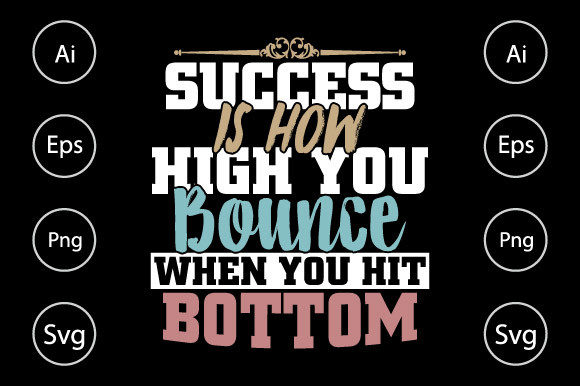
The first thing I noticed about Success is How High You Bounce when You is its clean, modern aesthetic. The typography appears balanced, suggesting a layout that avoids the cluttered look often found in lower-quality design assets. The mood it creates is one of resilience and quiet strength. It does not scream for attention with overly decorative flourishes; instead, it relies on strong letterforms to carry the message. This simplicity is a double-edged sword in embroidery. While it looks elegant, it means there is nowhere for poor stitching to hide. Every wobble in a satin stitch or inconsistency in tension will be visible.
For those of us working in Crafts and Graphics, the visual personality of this piece suggests it belongs on items meant for daily use and inspiration. It feels right at home on a gym bag, a office tote, or a cozy throw pillow. The design does not feel overly masculine or feminine, which broadens its appeal for custom apparel lines. When I visualize this as a finished product, I see it working best with a minimalist approach—perhaps a single thread color against a contrasting background to maximize readability.
Real-World Application: The Tote Bag Test
To truly understand the value of this design, let us walk through a realistic scenario. Imagine you are preparing a custom order for a local entrepreneur who wants branded merchandise for her coaching business. She chooses a heavy canvas tote bag design as the base. This is where Success is How High You Bounce when You shines. Canvas provides a stable foundation that can handle the density of the text without puckering.
In this context, the design acts as a focal point. Because the quote is about resilience, placing it on a durable item like a tote bag reinforces the message. The customer sees the product not just as a bag, but as a tool for their daily grind. However, during this hypothetical production run, I would pay close attention to the stitch density. If the letters are too dense, the canvas might become stiff and board-like. If they are too light, the weave of the fabric might show through, ruining the professional look. This is why having access to the original vector files, such as the AI or EPS formats mentioned in the product description, is crucial. It allows you to adjust sizing and spacing before converting to an embroidery file.
Apparel and Wearable Motivation
Moving beyond accessories, let us consider sweatshirt embroidery. A fleece or cotton blend sweatshirt is a popular canvas for motivational quotes. Here, Success is How High You Bounce when You offers a great opportunity for high-margin small shop product creation. The soft texture of a sweatshirt contrasts nicely with the structured nature of embroidered text. However, stretchy fabrics require caution. Without proper stabilization, the design can distort after the first wash. I recommend using a cut-away stabilizer for knit fabrics to ensure the letters remain crisp and do not sink into the pile of the fleece.
For baby embroidery projects, such as a onesie or a nursery blanket, the scale of the design becomes critical. You may need to resize the graphic significantly. When shrinking text-based designs, legibility is the first casualty. If the design includes fine serifs or thin lines, they may not stitch out cleanly at smaller sizes. In such cases, simplifying the design or choosing a bolder font variation—if available in the digital embroidery file package—is necessary. Always test on scrap fabric before committing to the final garment.
Technical Considerations for Stitching Clarity
One of the most important aspects of reviewing any machine embroidery design is understanding its technical limitations. Since the product description lists formats like AI, EPS, PNG, and SVG, it is clear that this is primarily a graphic resource that may need to be digitized or used in conjunction with existing embroidery software. If you are converting this yourself, pay attention to corner details. Sharp angles in text can cause thread breaks or bird nests if the digitizing does not include proper underlay stitches.
Thread colors play a massive role in the success of this project. On dark fabrics, a light-colored thread will pop, but you must ensure the contrast is high enough for the message to be read from a distance. On light fabrics, consider using a darker, richer tone to add depth. I often test designs in black and white mockups first to check for value contrast. If the design disappears in grayscale, it will likely lack impact when stitched.
Another factor is the hoop size. Ensure your machine’s hoop can accommodate the full width of the phrase. If you are working with a smaller hoop, you might need to split the design or reduce the font size, which again, risks legibility. For curved surfaces like caps, the distortion caused by the curve can make straight text appear bowed. In these cases, arcing the text slightly in your design software before digitizing can compensate for the visual distortion.
Commercial Viability and Brand Consistency
For commercial embroidery professionals, consistency is key. Using a design like Success is How High You Bounce when You can help build a cohesive brand identity if you are selling a line of motivational wear. It signals to your customers that you care about quality and meaningful content. However, always verify the licensing terms. Just because a file is available in SVG or EPS format does not automatically grant commercial rights for resale. Check whether the license allows for physical products, digital prints, or both.
When creating printable mockup previews for your online store, use high-resolution PNGs with transparent backgrounds. This allows you to place the design on various product images without tedious editing. A professional-looking preview can significantly increase buyer engagement and trust. Remember, customers buy with their eyes first. If the mockup looks pixelated or poorly aligned, they will assume the stitched product will be of similar quality.
Final Verdict and Designer Notes
In conclusion, Success is How High You Bounce when You is a strong contender for your next embroidery project. Its strength lies in its universal message and clean layout. However, its simplicity demands precision in execution. Here are my final practical notes for anyone planning to use this design:
- Test on Scrap Fabric: Never skip this step. Check for puckering and thread breaks.
- Check Stabilizer Choice: Use cut-away for knits and tear-away for wovens to maintain shape.
- Verify Legibility: Ensure the font size is large enough to be read easily, especially on smaller items like patches.
- Contrast is King: Choose thread colors that stand out sharply against the fabric background.
- Confirm Licensing: Before selling finished items, ensure you have the right commercial license for the graphics.
Whether you are creating a holiday embroidery gift or stocking your boutique with inspirational gear, this design offers a solid foundation. With careful attention to detail and proper technique, it can elevate a simple piece of fabric into a meaningful keepsake. Treat the design with respect, and it will reward you with a professional, polished result that resonates with your customers.