Reviewing Witch Please Sublimation Design PNG for Embroidery
As a designer who spends half my life digitizing and the other half stitching, I have learned that not every graphic translates well to thread. When I first pulled up the Witch Please Sublimation Design PNG, my initial reaction was one of cautious optimism. The visual personality is bold, playful, and undeniably trendy, tapping into that modern, slightly sassy aesthetic that dominates current craft trends. However, viewing a high-resolution image on a screen is vastly different from watching a needle punch through fabric. My job here is to bridge that gap, evaluating whether this asset belongs in your digital library for sublimation only, or if it can be adapted for a stunning embroidery project.
First Impressions: Mood and Visual Personality
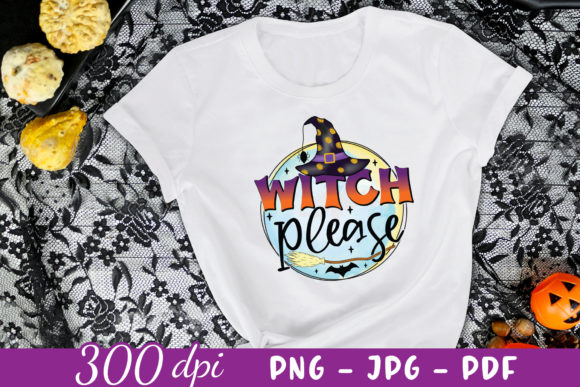
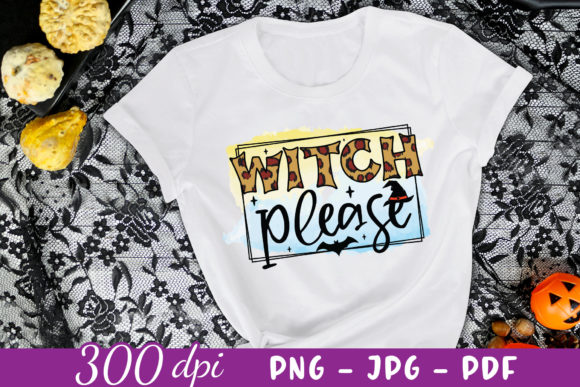
The design features eye-catching graphics paired with a beautiful quote, creating an immediate mood of whimsical confidence. For those of us in the Crafts industry, specifically within the Halloween or year-round witchy niche, this kind of imagery is gold. The layout appears balanced, with a clear focal point that draws the eye. In terms of Graphics, the clarity at 300 DPI is excellent for printing, but for embroidery, we look at shape definition. Does the design rely on subtle gradients that thread cannot replicate? Or does it use strong, solid shapes that will pop when stitched? This particular design leans toward strong silhouettes and clear typography, which is a promising sign for conversion into a machine embroidery design.
The Real-World Test: From Screen to Sweatshirt
To truly evaluate the potential of this file, I imagined a specific real-life scenario. Picture a local boutique owner preparing a line of custom apparel for the autumn season. She wants to create a premium sweatshirt embroidery piece that feels handmade yet professional. She chooses a heather grey crewneck, a popular choice for its soft texture and neutral backdrop.
If I were digitizing this Witch Please Sublimation Design PNG for her, I would focus heavily on the text. The phrase "Witch Please" needs to be legible without becoming a dense block of thread. In a real production environment, customers react best to designs that feel light on the fabric. A heavy, dense stitch pattern on a sweatshirt can feel stiff and uncomfortable. Therefore, the success of this design in embroidery hinges on how well the lettering is handled. Using a combination of satin stitch for smaller elements and a lighter fill stitch for larger graphical components would maintain the visual appeal while ensuring the finished product remains wearable.
Versatility Across Product Lines
One of the strengths of this design is its adaptability. While the product description highlights its use for t-shirts, mugs, and signs, an experienced eye sees broader potential. Consider a tote bag design. Canvas bags are sturdy and handle higher stitch densities well. This graphic could serve as a central feature on a large tote, appealing to shoppers looking for unique, statement accessories. Similarly, for holiday embroidery, this design fits perfectly into October merchandise runs, but its playful nature allows it to extend into general spooky-season decor, such as pillow covers or wall hangings.
For Etsy sellers and small shop owners, versatility equals profitability. If you can adapt one strong concept into multiple product types, you maximize your return on investment. Imagine this design scaled down for a cute embroidered patch that can be ironed onto denim jackets, or enlarged for a cozy blanket accent. The key is understanding how the thread colors interact with different backgrounds. On a dark navy tote, bright orange and white threads would scream for attention, whereas on a natural linen apron, muted earth tones might offer a more sophisticated, boutique vibe.
Technical Considerations and Potential Pitfalls
However, we must discuss where caution is required. Not every surface is friendly to complex graphics. If you are considering this for baby embroidery, you must be mindful of stitch density. Baby skin is sensitive, and heavy stitching can cause irritation. Furthermore, stretchy fabrics like those used in infant onesies require careful stabilization. Without proper backing, the design could pucker, ruining the clean lines of the quote.
Another critical area is curved surfaces, such as caps. Embroidering on a cap is technically challenging due to the limited hoop size and the curvature of the fabric. If the Witch Please Sublimation Design PNG has wide, sprawling elements, it may need to be broken down or simplified to fit within a standard cap frame. Tiny details and sharp corners can also get lost in translation. Thread has thickness; it cannot replicate the pixel-perfect precision of a printed PNG. Therefore, inspecting small details is crucial. If the original graphic has intricate linework, it may need to be thickened or simplified during the digitizing process to ensure stitching clarity.
Enhancing Brand Value and Customer Trust
Why does this matter for your craft business? Because quality builds trust. A sloppy embroidery job with loose threads or poor registration damages your brand reputation. Conversely, a well-executed design elevates the perceived value of your handmade product. When a customer receives a personalized gift that looks professional, they are more likely to leave a positive review and return for future purchases. This design, with its strong visual hook, has the potential to drive buyer engagement, provided it is executed with technical precision.
For commercial embroidery projects, consistency is key. If you are producing fifty units for a local event, every item needs to look identical. This requires rigorous testing. Do not skip the step of stitching out a sample on scrap fabric. Check the tension, verify the color contrast, and ensure the stabilizer you are using supports the fabric type. These small steps prevent costly mistakes in bulk production.
Practical Notes for the Designer
Before you rush to digitize or purchase this asset for embroidery use, here are my practical recommendations:
- Test on Scrap Fabric: Always run a test stitch-out on the actual fabric you plan to use. Different materials react differently to thread tension.
- Check Thread Contrast: Ensure your chosen thread colors stand out against the fabric. A low-contrast combination can make the text hard to read.
- Review Stitch Density: Keep density moderate to maintain fabric drape and comfort, especially for apparel.
- Confirm Hoop Size: Measure your design dimensions against your machine’s maximum hoop capacity.
- Inspect Small Details: Simplify any elements that are too fine for thread to capture accurately.
- Mockup in Black and White: This helps you see the value structure of the design without the distraction of color.
- Verify Licensing: The product description mentions PNG, JPG, and PDF files. It does not explicitly state that an embroidery file format (such as PES or DST) is included. You will likely need to digitize this yourself or hire a digitizer. Confirm the license terms to ensure you are allowed to sell finished items created from this design.
In conclusion, the Witch Please Sublimation Design PNG is a strong candidate for adaptation into embroidery. Its bold aesthetics and clear messaging align well with current market demands. However, its success depends entirely on thoughtful digitizing and careful material selection. By respecting the limitations of thread and fabric, you can transform this digital graphic into a tangible, high-value small shop product that delights customers and strengthens your brand.